admin
Key points:
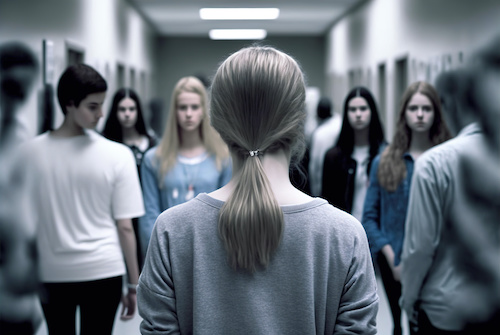
Mean girls: These two words perfectly described my fourth period speech class. Class culture I had worked so hard to create was crushed overnight with the addition of three female transfer students. They were seniors among a class of sophomores. The ‘new girl seniors’ easily took power over the sophomores and began their intimidation. There were eye-rolls, sarcastic comments, and quiet snickering, but even as an experienced teacher, I did not brand their behavior as bullying. Then, I noticed my sophomores started being absent on their scheduled speech days.
It hit me. My students were afraid in my classroom. Unclear what to do, I instituted a “Total Quiet” policy. Crossing my doorway meant zero talking. Class wasn’t fun, but it was safe. I quickly sought help from our school counselor, who connected with some of the parents, and I learned something critical: The girls transferred schools because they were in a car accident that killed one of their friends and they needed a new start. These girls were so guilt-ridden that they lashed out with classic “I will hurt you before you can hurt me” behavior.
After much parent/teacher/student interaction and tough conversation, we finally reached a climate of safety and respect.
We began to heal by building relationships.
While this isn’t the most dramatic school bullying story, it is a very typical one. Bullying is any aggressive behavior by an individual(s) that intends to hurt another (Smith, 2016: Campbell and Bauman, 2018). This one definition encompasses traditional bullying behavior such as fighting on the playground to “cancelling” someone through social media.
While bullying is certainly not exclusive to schools and school-age kids, it is something that parents and educators must take responsibility for addressing because our number one responsibility as collaborators in our kids’ lives is to keep them safe. Children cannot focus on learning until they feel safe. There are a number of school-wide programs aimed at preventing bullying in schools, and many are backed by reliable research and are successful. These school programs are critical and relatively effective at addressing the causes and effects of bullying at the macro-system level. However, research also posits that one of the most impactful tools in battling the negative effects of bullying at the individual level is strong relationships.
Parents. Teachers. Peers. These three groups make up a large portion of a child’s reality. A child’s perception of reality is the child’s truth, and if a child is feeling bullied, or excluded, or shunned, that is that child’s truth. But if children feel a close connection to their parents and that their parents listen to them and are available to help and guide them, then they will turn to their parents in times of trouble. In the same vein, if a child feels connected to, heard by, and led by their teachers, then they will turn to their teachers in times of trouble.
It is important that parents and teachers are as committed to connecting with, guiding, and supporting school-age children as they grow because bullying becomes more sophisticated and harder to observe as children get older. Cyberbullying has the same effect and can create the same perception of reality as in-person bullying. Teens who have strong, positive relationships with their parents and teachers will continue to lean on those relationships as they get older.
While parents may feel that protecting their growing children from bullies, both cyber and in-person, is insurmountable, all the sound principles of maintaining strong relationships with their children still apply. Although it may seem more difficult to stay connected to older kids, our kids still notice if we are available, listening, and supporting. The same notion applies to teachers. If our students are hearing the same message from both parents and teachers about how to recognize bullying behaviors both in person and in cyber spaces, they will realize that they are not alone.
But perhaps the most important benefit of teachers and parents fighting for those close relationships with our kids is this: It is much harder for a child to be a bully when they know they are being seen. I have never met a child who wanted to disappoint the adults who love and care for him. It is our responsibility as parents and teachers to truly see all aspects of our kids, not just the “shiny” parts. It is the parenting and the teaching that happen in those necessary but uncomfortable moments that steer our kids away from being a bully and toward being a positive member of our families, classes, teams, and communities.
Our kids rely on the strong relationships their parents and teachers have worked so hard to establish.