admin
Key points:
- Probeware is key in helping students make sense of scientific concepts
- 5 powerful ways to link STEM lessons to real-world applications
- Rural areas are poised for unique STEM education, but need more resources
- For more news on STEM learning, visit eSN’s STEM & STEAM hub
STEM careers are on the rise. According to the U.S. Bureau of Labor Statistics, employment in STEM occupations is expected to grow by 10.4 percent from 2023 to 2033, compared to just 3.6 percent for non-STEM occupations. Despite this demand, many students lack the foundational interest or skills needed to pursue these opportunities.
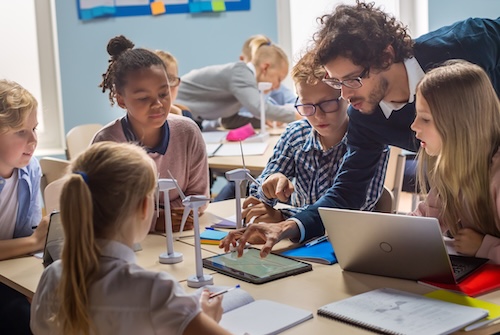
Hands-on STEM learning can bridge this gap. Allowing students to explore and actively engage with real-world phenomena sparks curiosity, deepens understanding, and levels the playing field for learners with diverse needs and experiences.
Why hands-on STEM learning works
Research shows experiential learning is a powerful way to keep students engaged in STEM. In one study, 92.6 percent of participants identified hands-on lab work as the key factor inspiring them to pursue STEM degrees and careers. This data demonstrates how giving students direct, tangible experiences with STEM concepts can leave a lasting impression.
One of the most effective ways to create these meaningful learning experiences is through the use of probeware. Research shows that integrating probeware in STEM instruction boosts student motivation, particularly in subjects that are often perceived as difficult or abstract. Using tools that provide immediate, tangible feedback, students can engage in investigations that mirror the work of real scientists and connect data to the real-world processes they observe.
As science education continues to shift toward hands-on, three-dimensional learning, probeware plays a pivotal role in helping students make sense of scientific concepts in the ways envisioned by the Next Generation Science Standards (NGSS), ultimately strengthening their ability to think critically and solve problems.
Supports all students. Research shows that STEM education has long faced challenges in engaging historically underrepresented groups, including students of color, girls, and those from low-income and rural communities. Disparities in access to high-quality STEM learning opportunities often begin early, compounded by a lack of representation. Visual, tactile, and relevant learning offers a solution to these disparities.
Incorporating student-centered activities that align with their interests and backgrounds creates a relatable learning environment for every student, making the classroom an exciting place to be. And when students from diverse backgrounds work together on meaningful projects, they bring unique perspectives to the table, promoting deeper engagement and broadening perspectives.
Connects learning to tangible, real-world outcomes. As students explore STEM topics through their own lenses and experiences, their enthusiasm and investment in learning naturally increase. For instance, localized projects like investigating the environmental impacts of neighborhood pollutants not only teach core STEM concepts but also connect students to their communities.
In Volusia County, Florida, Volusia County School students navigate wetlands, test water quality, and track environmental shifts using Vernier technology. These tools bring science to life, allowing them to collect, graph, and analyze real-world data with precision while making a measurable impact in their community. This field-based approach to investigations has helped high school students identify and track declining river health, share findings that prompted action from local and federal agencies, and restore local conch populations.
Students see the impact of their work firsthand when participating in projects that address real-world issues they care about. These experiences build a sense of purpose and demonstrate how STEM skills can drive relevant, positive change locally and globally.
Builds critical thinking and teamwork skills. Hands-on STEM learning also builds essential skills like critical thinking, problem-solving, and data analysis. Probeware supports this by giving students opportunities to engage in real-world investigations, test hypotheses, and interpret data in meaningful ways. Rather than just memorizing facts, students take a more active role in asking questions, investigating phenomena, and constructing explanations, strengthening their computational thinking and scientific reasoning.
Bridging the STEM gap
So how can educators bring the benefits of hands-on STEM learning to their schools? As discussed in The State of STEM Learning, one of the biggest challenges is that many school systems still separate science, technology, engineering, and math into distinct subjects. This makes it harder for students to see the connections between disciplines and apply their learning to real-world problems.
Hands-on investigations help bridge this gap. When students ask questions about real-world phenomena, engage in real-time data collection, or think critically about engineering design challenges, they naturally integrate concepts across STEM fields–just like scientists and engineers do in their work.
A version of this blog post originally appeared on Vernier Science Education’s blog and is reposted with permission.