
 admin
Last Updated:
The new line will include 21 stations and extend the Shaheed Sthal (New Bus Adda)-Rithala Red Line corridor.
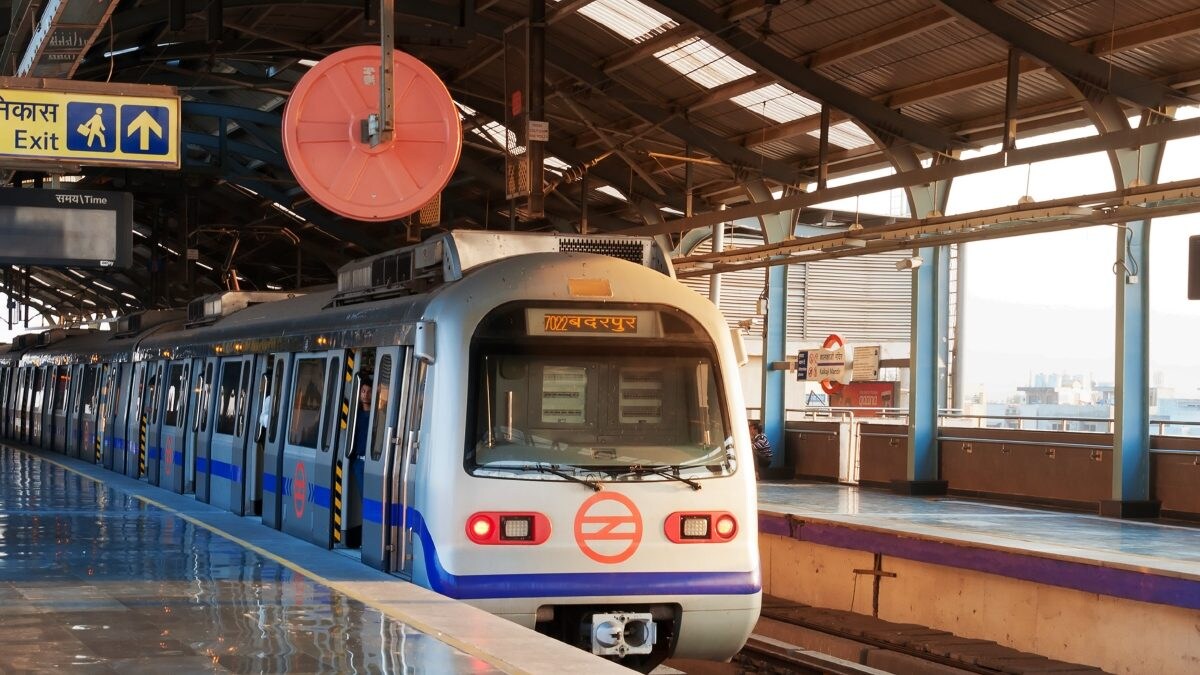
The network spans 392 km with 288 stations across Delhi and the NCR. (Image for representation/Shutterstock)
To improve connectivity between Delhi and neighbouring states, the Delhi Metro’s Red Line will be extended to Haryana’s Kundli.
As per India Today, the Union Cabinet approved the 26.463-km Rithala-Kundli corridor as part of the Delhi Metro Phase-IV project. This extension will be the first to directly link Haryana and Uttar Pradesh via Delhi, making the Delhi Metro one of the three largest metro systems globally.
Union Minister Ashwini Vaishnaw announced that the project is set to be completed within four years at an estimated cost of Rs 6,230 crore.
The new corridor will have 21 stations and will expand the current Shaheed Sthal (New Bus Adda)-Rithala section. It will enhance connectivity in Delhi’s northwestern areas, including Narela, Bawana, and parts of Rohini.
This extension marks Delhi Metro’s fourth entry into Haryana, joining existing lines that reach Gurugram, Ballabhgarh, and Bahadurgarh. A government statement revealed that 56 percent of Phase-IV’s 65.202 km and 45 stations have already been completed, with full completion expected by March 2026. Two additional corridors covering 20.762 km have been approved and are in the early stages of planning.
Stations on the Rithala-Kundli Corridor:
- Rithala
- Rohini Sector 25
- Rohini Sector 26
- Rohini Sector 31
- Rohini Sector 32
- Rohini Sector 36
- Barwala
- Rohini Sector 35
- Rohini Sector 34
- Bawana Industrial Area 1 Sector 3, 4
- Bawana Industrial Area 1 Sector 1, 2
- Bawana JJ Colony
- Sanoth
- New Sanoth
- Depot Station
- Bhorgarh Village
- Anaj Mandi Narela
- Narela DDA Sports Complex
- Narela
- Narela Sector 5
- Kundli
- Nathpur
Currently, Delhi Metro serves an average of 64 lakh passengers daily, with the highest recorded journey at 78.67 lakh on November 18, 2024. The network spans 392 km with 288 stations across Delhi and the NCR.

