
 admin
PCB Board Maker Used
Printed circuit boards (PCB) are electronic devices that connect and control the function of other electronic components. They are used in a variety of products including computers, cellphones, laptops and other consumer electronics. PCBs are also used in medical devices such as heart rate monitors, blood pressure monitors and pacemakers. These devices require reliable and high-performance PCBs.
A PCB can be made using both subtractive and additive methods. Subtractive methods include etching and laser milling. Additive methods include photoengraving and direct imaging. In the etching process copper is added to bare laminate using a complex electrical and chemical process. After the copper is added the remaining insulating layers are exposed. The exposed areas are then “sensitized” in a bath with palladium. The sensitized layer allows metal ions to bond with the exposed copper. The resulting copper-plated circuit board is then machine-routed.
The insulating layer, or substrate, of a PCB is usually made from an epoxy-based material. It can be either rigid or flexible, depending on the design requirements of the circuit board. The substrate may be coated with a dielectric such as polytetrafluoroethylene (Teflon), FR-4, FR-1, CEM-3 or CEM-2. Other materials can be used for the substrate, such as woven glass and epoxy or phenolic cotton paper and epoxy.
Conductive layers, or traces, on a PCB are routed through holes in the substrate. The traces are connected to each other with copper wires that pass between the different layers. For a single-sided PCB there is one conductive layer on the substrate; for double-sided and multilayer boards there are two.
In addition to traces, the surface of the PCB can contain other features such as lands for mounting components. The lands connect the different layers of the PCB, providing additional mechanical support and electrical insulation. These lands can be connected to the copper traces with solder or other metallic adhesives.
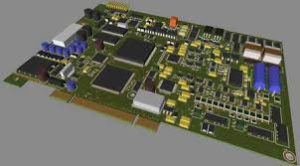
What is a PCB Board Maker Used For?
There are two main ways that components can be mounted on a PCB: through-hole and surface mount. Through-hole components have their wire leads passing through the entire PCB and are soldered to corresponding copper traces on both sides of the substrate. Surface mount components have their lead ends attached to pads on the surface of the substrate.
In most cases, through-hole components are used on higher-quality PCBs while surface mount components are more common in low-cost consumer electronics. The use of surface-mount components can allow for smaller PCBs, which are less expensive and simpler to produce. However, it can be difficult to service a faulty surface-mount component.
A Printed Circuit Board (PCB) maker is an essential tool in the electronics manufacturing industry, used to create PCBs, which are the backbone of modern electronic devices. PCBs provide the physical platform for mounting and interconnecting electronic components, enabling the creation of complex circuits in a compact and efficient manner.
One of the primary uses of a pcb board maker is in the design and prototyping phase. Engineers and designers use PCB makers to create prototype boards for testing and validation before mass production. This allows for rapid iteration and refinement of circuit designs, ensuring functionality and performance meet the desired specifications.

